 +91 72991 99111
 info@kamaielevator.com


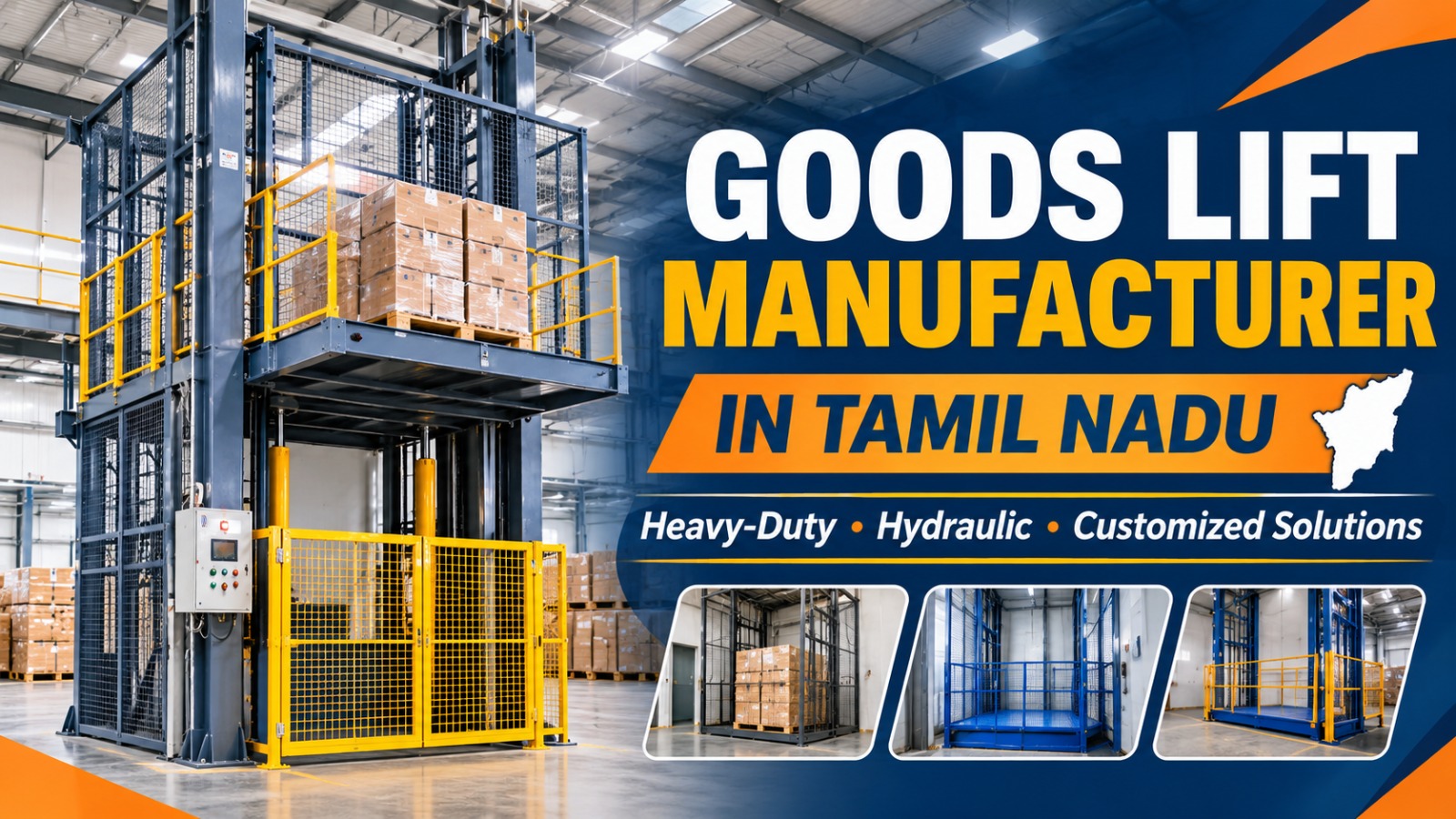
Moving heavy materials between floors is a regular requirement in factories, warehouses, manufacturing units, shopping complexes and commercial buildings. Carrying goods manually or depending on unsuitable lifting equipment can slow down operations and create unnecessary handling risks.
A properly designed goods lift helps businesses move materials between floors with better control and efficiency. However, selecting the right equipment requires more than comparing prices. Load capacity, platform dimensions, lifting height, building structure, safety systems and maintenance support all matter.
If you are searching for a goods lift manufacturer in Tamil Nadu, understanding these factors will help you choose a solution that suits your building and daily operations.
Understand Your Material Handling Requirements
Before approaching a manufacturer, identify what the lift needs to transport. Different businesses handle different types of materials, and the equipment should match those requirements.
For example:
- Factories may need to move raw materials, machine components and finished products.
- Warehouses may transport cartons, pallets and packaged goods.
- Commercial buildings may require lifts for stock, supplies and equipment.
- Hospitals and institutions may need dedicated arrangements for moving supplies and heavy equipment.
Consider the average load, maximum load, dimensions of the goods, number of trips per day and the floors between which materials need to move. These details help the manufacturer recommend a suitable configuration.
Select the Right Load Capacity and Platform Size
Load capacity is one of the most important specifications when choosing a goods lift. A lift designed for occasional light loads may not be appropriate for a facility that regularly moves heavy materials.
Discuss these requirements with the manufacturer:
- Maximum weight to be transported per trip.
- Platform length and width.
- Required lifting height.
- Number of floors or landing points.
- Type of loading and unloading.
- Frequency of daily operation.
The platform should accommodate the size and shape of the materials without making loading difficult. Avoid choosing a lift based only on its maximum weight capacity. The actual dimensions and handling method also influence the design.
Check Safety Features and Construction Quality
A goods lift operates in an environment where materials may be heavy, bulky or difficult to handle. Safety systems and suitable construction are therefore essential.
During your discussion with the manufacturer, ask about:
- Overload protection.
- Landing door interlocks.
- Emergency stop controls.
- Limit switches.
- Emergency operation during power failure.
- Suitable platform flooring.
- Enclosure and access protection.
- Inspection and testing before commissioning.
The required safety arrangements depend on the lift design and installation conditions. Ask for the applicable technical documentation and confirm that the proposed system meets relevant statutory and safety requirements.
Consider the Building Layout Before Installation
Not every building has the same structural arrangement. Available shaft space, floor height, loading access, electrical supply and civil work requirements can influence the goods lift design.
A proper site assessment helps determine whether the proposed equipment can be installed safely and conveniently.
Share your building drawings, floor details and available installation space with the manufacturer. Also clarify who will handle the required civil work, electrical connections and supporting structures.
Kamai Elevators offers elevator design, manufacturing, installation, testing and commissioning services for different building requirements. Explore Kamai Elevators' lift manufacturing and installation solutions to understand its range of elevator systems.
Compare the Total Cost, Not Just the Initial Price
The cost of a goods lift varies according to its capacity, travel height, platform size, drive system, number of landings, door configuration and site conditions.
When requesting quotations, ask manufacturers to provide a clear breakdown covering:
- Lift equipment and manufacturing.
- Platform and cabin specifications.
- Doors and safety systems.
- Installation and commissioning.
- Electrical and civil work requirements.
- Warranty coverage.
- Annual maintenance charges.
- Availability of spare parts and service support.
A lower initial quotation may not include every item needed for installation. Comparing the complete scope of work helps avoid unexpected expenses later.
Why Manufacturing and After-Sales Support Matter
A goods lift is part of your building's daily operations. If it stops working, material movement can be delayed and affect other activities.
Choose a manufacturer that can support the project beyond equipment supply. Design consultation, installation coordination, testing, commissioning, preventive maintenance and service assistance are important parts of the overall solution.
Kamai Elevators provides elevator solutions for industrial, commercial, residential and institutional projects across Tamil Nadu. Its product range includes goods lifts, passenger elevators, hospital lifts and other customised elevator systems.
Businesses can discuss their material handling requirements with the team before deciding on the appropriate lift configuration.
How to Choose the Right Goods Lift Manufacturer in Tamil Nadu
Before finalising a manufacturer, compare more than the product catalogue. Review the company's manufacturing experience, technical capabilities, installation process, service coverage and previous project experience.
Ask these questions during your initial discussion:
- Can the lift be customised to suit the building layout?
- What load capacities and platform dimensions are available?
- What safety systems are included?
- Does the quotation cover installation and commissioning?
- What maintenance and service support is available?
- What site preparation is required before installation?
Getting clear answers will help you compare manufacturers and select equipment that suits your operational needs.
Frequently Asked Questions
1. What is a goods lift used for?
A goods lift is designed to transport materials, products, equipment and other loads between floors in factories, warehouses, commercial buildings and industrial facilities.
2. How do I select the right goods lift capacity?
Consider the maximum weight transported per trip, material dimensions, daily usage, number of floors and loading method. A manufacturer's technical team can recommend a suitable capacity after assessing the requirements.
3. Can a goods lift be customised for an existing building?
Yes. Goods lift specifications can be planned around available space, floor height, loading access and building conditions. A site inspection is necessary to confirm feasibility.
4. What factors affect goods lift installation cost?
Capacity, lifting height, platform size, drive system, number of landings, safety features, installation conditions and additional civil or electrical work can affect the overall cost.
5. Does Kamai Elevators provide goods lift installation and maintenance?
Kamai Elevators provides elevator manufacturing, installation, testing, commissioning and maintenance services. Contact its team to discuss the requirements of your project.
Get the Right Goods Lift Solution for Your Facility
Choosing the right goods lift can improve material movement and support day-to-day operations in industrial and commercial buildings. The key is to select equipment that matches your load requirements, building layout and expected usage.
If you are planning a new installation or upgrading an existing facility, contact Kamai Elevators to discuss your project requirements and request a suitable goods lift solution across Tamil Nadu.