 +91 72991 99111
 info@kamaielevator.com


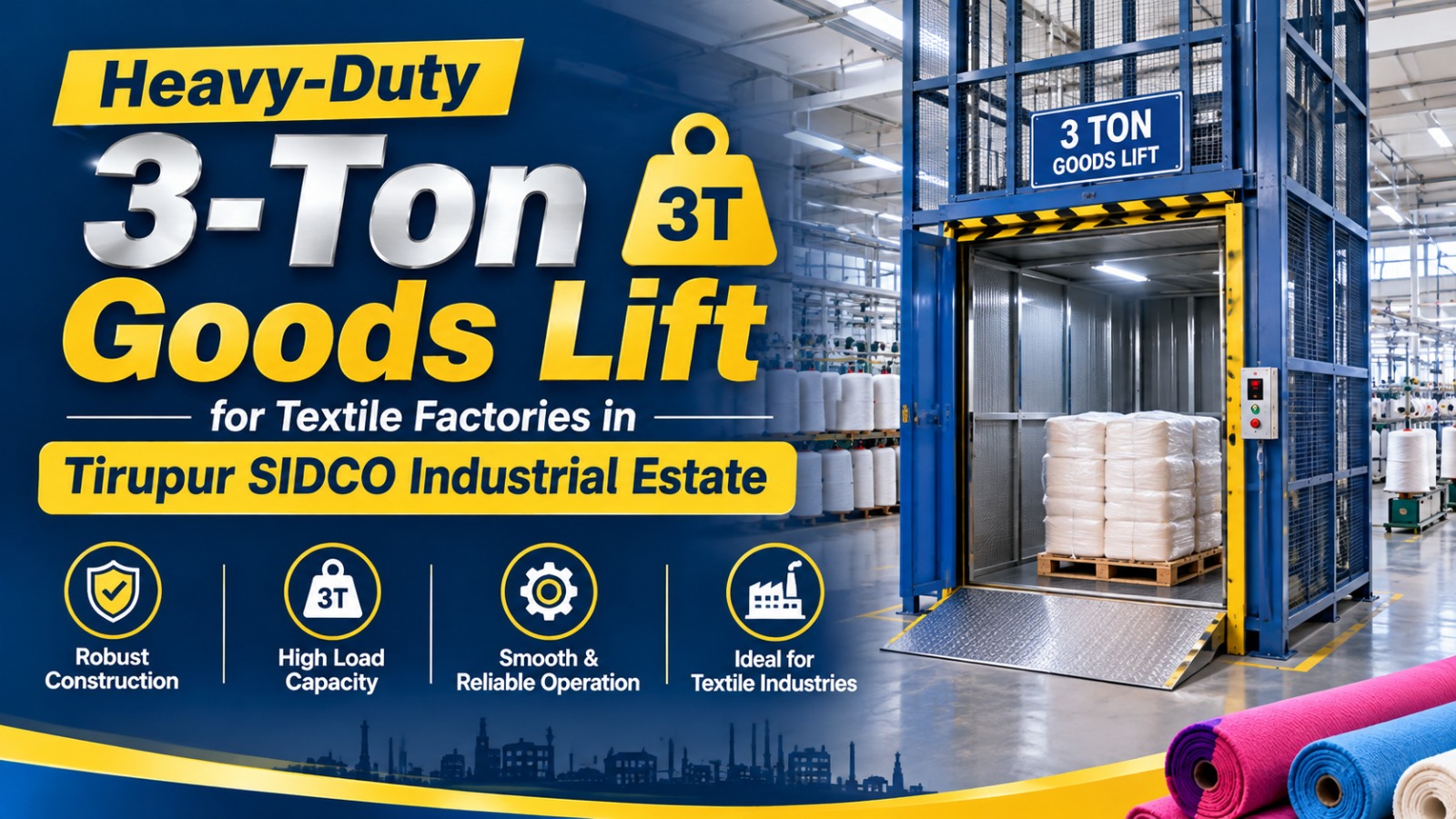
Textile factories handle large quantities of raw materials, yarn, fabric rolls, machinery components and finished products every day. When production, storage and dispatch areas are located on different floors, moving these materials manually can slow down operations and increase handling difficulties.
For textile manufacturers in Tirupur SIDCO Industrial Estate, a heavy-duty 3-ton goods lift can support the movement of industrial materials between floors. Selecting the right lift involves more than choosing a 3,000 kg capacity. Platform dimensions, loading methods, building layout, operating frequency and safety systems must also match the factory's requirements.
Why Does a Textile Factory Need a 3-Ton Goods Lift?
Textile production involves frequent movement of heavy and bulky materials. A suitable industrial goods lift helps connect different production and storage levels while reducing dependence on manual material movement.
A 3-ton goods lift may be considered for transporting:
- Yarn packages, cones and raw textile materials.
- Fabric rolls and packed textile products.
- Cartons and finished garment consignments.
- Production equipment and machinery components.
- Palletised materials and warehouse inventory.
The actual capacity requirement should be calculated using the maximum combined weight of the load, pallets and handling equipment carried inside the lift.
Is a 3,000 kg Goods Lift Suitable for Your Factory?
A 3-ton goods lift has a rated load capacity of 3,000 kg. Whether this is suitable for a particular textile unit depends on its daily material movement and loading requirements.
Before finalising the capacity, consider:
- Maximum load weight: Identify the heaviest planned load, including packaging and pallets. Avoid selecting capacity based only on average daily loads.
- Material dimensions: Fabric rolls, machinery parts and palletised goods may require different platform dimensions. Check the length, width and height of the largest items.
- Loading equipment: If forklifts, pallet trucks or other handling equipment enter the lift, include their weight and dimensions in the design assessment.
- Daily operating frequency: A factory moving materials throughout multiple production shifts may require a different configuration from a unit with occasional vertical transportation.
- Floor-to-floor movement: The number of stops, travel height and loading positions affect the lift design.
A site inspection helps establish the correct configuration instead of relying on capacity alone.
Important Features to Check in an Industrial Goods Lift
For textile factories in Tirupur, the following features deserve attention when evaluating a heavy-duty goods lift.
1. Heavy-Duty Steel Platform
The platform or enclosed cabin should be designed for the specified load and intended material dimensions. Its construction should suit the factory's operating environment and loading process.
2. Suitable Door Configuration
Door width and height must accommodate the largest goods being transported. Depending on the building layout, manual swing doors, collapsible gates or automatic doors may be considered.
3. Overload Protection
An overload protection system helps prevent operation when the load exceeds the lift's rated capacity. This is an important safety consideration in industrial material handling.
4. Door Interlocks and Emergency Stop
Door interlocks help prevent unsafe operation when doors are not properly secured. Emergency stop systems and suitable limit switches provide additional operational protection.
5. Appropriate Lifting Technology
Hydraulic and traction goods lifts are available for industrial applications. The suitable system depends on travel height, capacity, operating requirements and building conditions.
Planning a Goods Lift Installation in Tirupur SIDCO Industrial Estate
Installing a 3-ton goods lift in an existing textile factory or a new industrial building requires proper coordination between the lift manufacturer, factory management and building team.
The planning process should cover:
- Site inspection: Assess available space, floor heights, structural conditions and loading areas.
- Capacity assessment: Confirm the maximum load, material dimensions and expected operating frequency.
- Lift design: Finalise platform size, door configuration, lifting system and required safety features.
- Civil and electrical preparation: Complete the shaft, pit, structural and power requirements according to approved drawings.
- Installation and commissioning: Coordinate installation, testing and commissioning with the relevant technical professionals.
- Maintenance planning: Establish inspection and preventive maintenance schedules based on usage and applicable requirements.
Factory owners should also confirm the applicable lift approvals, statutory requirements and safety documentation before putting the equipment into operation.
Why Choose Kamai Elevators for a 3-Ton Goods Lift?
Kamai Elevators manufactures goods lifts for factories, warehouses, manufacturing facilities and commercial buildings. Its published goods lift specifications include capacities from 500 kg to 5,000 kg, with customised platform designs and different door configurations.
The company's goods lift solutions include:
- Heavy-duty steel platforms and enclosed cabin options.
- Hydraulic and traction goods lift systems.
- Customised load capacities and platform dimensions.
- Overload protection and emergency stop systems.
- Door interlocks and limit switches.
- Site inspection, design, installation and testing.
- Maintenance and after-sales support.
For textile units planning a 3,000 kg installation, the industrial goods lift solutions from Kamai Elevators provide a starting point for discussing the required configuration.
Frequently Asked Questions
1. What is a 3-ton goods lift?
A 3-ton goods lift is an industrial lifting system designed to carry a rated load of 3,000 kg between floors. It is used in factories, warehouses and manufacturing facilities for transporting materials and equipment.
2. Can a 3-ton goods lift be used in a textile factory?
Yes. A suitably designed goods lift can transport yarn packages, fabric rolls, cartons, machinery components and other textile materials, provided the load, dimensions and operating requirements are within its approved specifications.
3. What platform size is required for a 3-ton goods lift?
There is no single platform size for every 3-ton lift. The dimensions depend on the largest materials being transported, loading equipment, door clearance and available building space.
4. Which is better for a factory: hydraulic or traction goods lift?
Both systems can be used for industrial material handling. The choice depends on travel height, load capacity, operating frequency, building layout and project requirements. A site assessment helps determine the appropriate system.
5. Does a goods lift require regular maintenance?
Yes. Regular inspection and preventive maintenance help identify wear, operational issues and safety concerns. The maintenance schedule should follow the manufacturer's instructions and applicable regulations.
6. Does Kamai Elevators provide 3-ton goods lift solutions in Tamil Nadu?
Kamai Elevators publishes goods lift capacities up to 5,000 kg and provides installation services across Tamil Nadu. Factory owners in Tirupur can contact the company to discuss site assessment and a customised 3-ton lift proposal.
Discuss Your Textile Factory Goods Lift Requirements
A properly planned 3-ton goods lift can improve vertical material movement between production, storage and dispatch areas in a textile factory. The right solution depends on load capacity, platform dimensions, building structure and daily operating requirements.
Kamai Elevators provides customised industrial goods lift solutions for factories and manufacturing facilities across Tamil Nadu.
Contact the team to discuss your project in Tirupur SIDCO Industrial Estate.
Kamai Elevators
Phone: +91 72991 99111
Email: info@kamaielevator.com
Website: https://www.kamaielevator.com/